
Why Food Factories and Restaurants Cannot Rely on Insect Light Trap Alone: Understanding Integrated Pest Management (IPM)
In food processing plants, central kitchens, and restaurant environments, flying insects are more than just a nuisance—they can become a significant food safety risk. When faced with insect problems, many businesses immediately think of installing insect light traps. However, without a comprehensive pest management strategy, they often find themselves in a situation where insects are continuously captured, yet the problem never truly disappears.
The reality is that insect light traps are only one component of effective flying insect control. To minimize insect-related risks, businesses should implement an Integrated Pest Management (IPM) program that focuses on preventing pest issues at the source rather than relying on a single device.
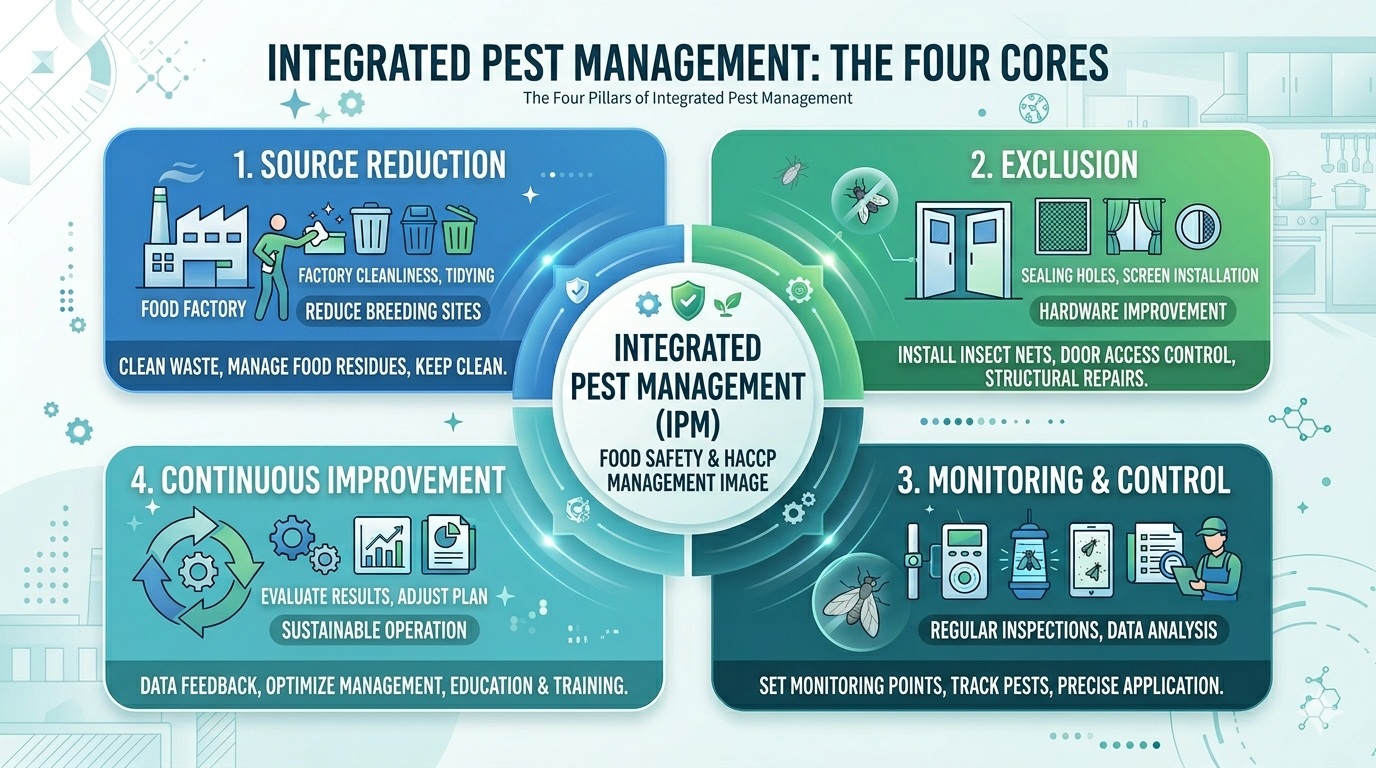
What Is Integrated Pest Management (IPM)?
Integrated Pest Management (IPM) is a preventive pest control strategy that combines environmental management, physical barriers, monitoring systems, and continuous improvement to reduce the likelihood of pest infestation.
Unlike traditional approaches that depend heavily on pesticides or insect control devices, IPM emphasizes long-term prevention and risk management. It is widely adopted in food manufacturing facilities, central kitchens, restaurants, warehouses, and other hygiene-sensitive environments.
The Four Core Principles of IPM
1. Source Reduction
Regularly clean drains, waste disposal areas, food waste storage zones, and damp locations to eliminate breeding sites and reduce pest populations at their source.
2. Entry Prevention
Install air curtains, automatic doors, insect screens, strip curtains, and other physical barriers to prevent flying insects from entering indoor environments.
3. Monitoring and Control
Use insect light traps and glue boards to monitor insect activity, identify high-risk areas, and track population trends as part of an effective pest management strategy.
4. Continuous Improvement
Adjust equipment placement, sanitation procedures, and pest control measures based on monitoring results to establish a long-term and effective prevention program.
The Role of Insect Light Traps in IPM
Many people consider insect light traps to be the primary tool for flying insect control. However, within an IPM framework, their most valuable role is often monitoring rather than elimination.
By analyzing captured insect quantities and distribution patterns, facility managers can identify breeding sources, insect activity hotspots, and the effectiveness of existing control measures. For example, a sudden increase in captures within a specific area may indicate sanitation issues, structural gaps, or nearby breeding sources that require attention.
Therefore, while insect light traps are an essential component of pest management, they cannot solve the problem entirely if breeding sites and environmental conditions remain unchanged.
Building a Complete Flying Insect Management System
Whether in food processing facilities, central kitchens, restaurants, or food storage warehouses, flying insect control should be viewed as a critical food safety management practice rather than simply an equipment purchase.
A comprehensive flying insect management program should include:
✔ Environmental sanitation and source reduction
✔ Physical barriers at entry points
✔ Insect monitoring and record keeping
✔ Regular inspections and continuous improvement
By combining IPM principles with properly selected commercial insect light traps, businesses can effectively reduce insect-related risks while improving hygiene standards and brand reputation.
Reminder: Insect Light Traps Are Not the Only Solution
Insect light traps are important tools, but the true effectiveness of pest control depends on proper environmental management and strategic equipment placement.
Only by addressing all four IPM principles—Source Reduction, Entry Prevention, Monitoring & Control, and Continuous Improvement—can businesses establish a sustainable pest management program that supports food safety requirements.
For food manufacturers, central kitchens, and restaurant operators, implementing an IPM program not only reduces pest risks but also strengthens food safety performance and overall business competitiveness.
To learn more about flying insect management and commercial insect light trap applications, please visit:
• Commercial Flying Insect Management & Insect Light Trap Configuration
WELL Electronics | 40 Years of Professional Commercial Insect Light Trap Manufacturing
Specializing in commercial insect light traps, glue board fly traps, food facility insect control solutions, and OEM/ODM manufacturing services to help businesses create safer and more effective pest management environments.