
How to Manage Flying Insects in Commercial Spaces? Complete Guide to Insect Light Trap Placement for Different Environments
Effective flying insect control in commercial spaces requires a combination of environmental management and proper equipment planning. A complete strategy should include sanitation management, entrance control, operational habits, installation planning, and customized equipment configurations for different environments to maximize food safety and pest control performance.
Key Factors: Capture Efficiency & Energy-Saving Maintenance
- UV Wavelength & LED Technology: The true key to insect attraction lies in the UV-A wavelength rather than brightness. LED insect light traps provide stable light output, lower light decay, and longer service life.
- Maintenance Cost: LED systems consume less energy and require less frequent replacement. For large-scale applications such as food factories or chain restaurants, the long-term energy-saving benefits are even more significant.
Application & Installation Strategies
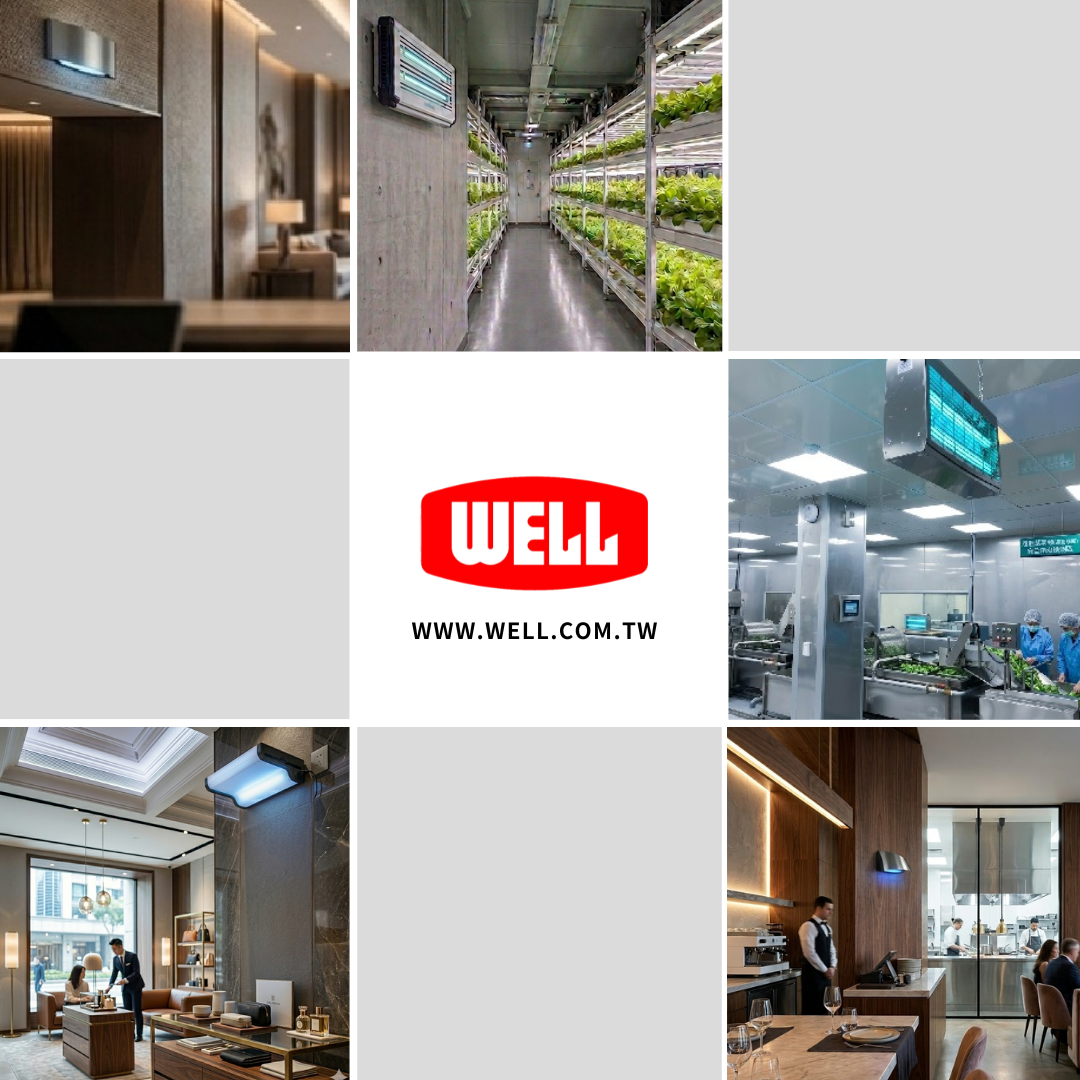
- # Cafés & Restaurants: Aesthetic appearance and quiet operation are essential. Wall-mounted, slim LED glue-board insect light traps are recommended to avoid disturbing dining environments.
- # Food Processing Facilities: HACCP compliance is critical. Glue-board insect light traps are required, while electric grid types should be avoided to prevent insect fragmentation and contamination.
- # Hotels & Shopping Malls: Interior integration is important. Concealed or low-glare LED models are ideal for maintaining a clean and premium atmosphere.
- # Warehouses & Logistics Centers: The focus is on intercepting insects at entry points. High-output models with multi-point coverage are recommended.
- # Plant Factories: Humidity control must be considered. Specialized LED glue-board systems are suitable for zone-based insect management.
Installation Positioning & Capture Optimization
- Proper Placement Matters: Install units along insect entry routes and near entrances, while avoiding strong competing light sources. Never place insect light traps directly above food preparation areas.
- Visual Contrast: Higher color contrast between the unit and the wall surface (e.g., dark-colored unit on a white wall) can improve attraction performance.
- Advantages of Horizontal Design: Horizontal lamp configurations provide more even light distribution and are generally more effective than narrow vertical designs.
Flying Insect Control Is a Complete Management System
Insect light traps are only one part of an overall environmental management strategy. WELL Electronics provides commercial glue-board and LED flying insect control solutions to help businesses achieve the ideal balance between food safety, environmental hygiene, and brand image.
WELL Electronics | 40 Years of Professional Manufacturing Experience