
Interesting Insect Facts: Understanding Pest Behavior Helps Insect Traps Work Better
Mosquitoes, flies, and other flying insects are common problems in daily life and commercial environments. However, most pests actually follow predictable behavior patterns. By understanding their habits, businesses can improve the effectiveness of insect traps, commercial fly killers, and flying insect control equipment. This article explores interesting insect facts while explaining practical pest management concepts commonly used in food factories, restaurants, warehouses, and commercial facilities.
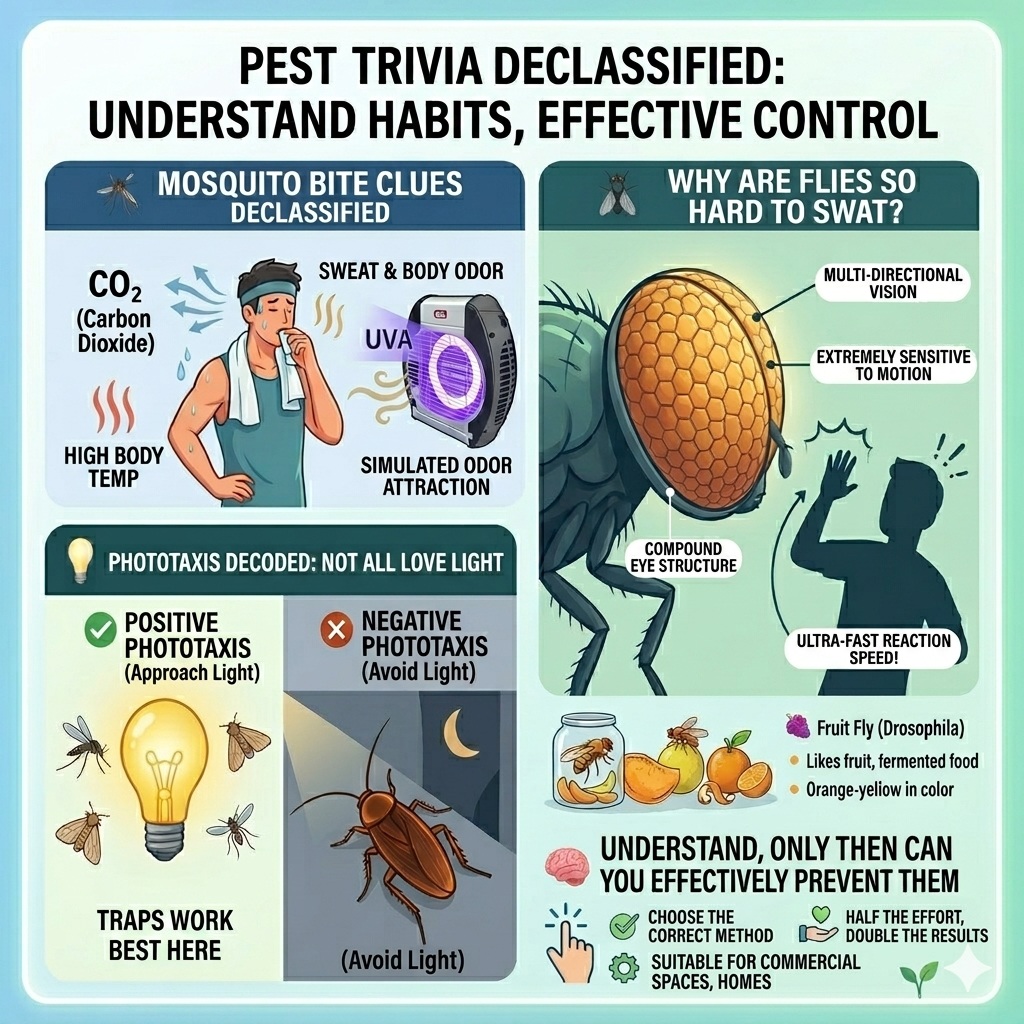
Interesting Facts About Common Flying Insects
1. Why Do Mosquitoes Prefer Certain People?
Mosquitoes do not bite randomly. They locate targets through carbon dioxide (CO₂), body heat, and chemicals such as lactic acid and ammonia found in sweat and body odor. People with higher metabolism, heavier breathing, or those who have just exercised are often more attractive to mosquitoes. This is why commercial insect traps use specific UVA light wavelengths and attractant principles to improve flying insect capture efficiency in restaurants, food factories, warehouses, and logistics environments.
2. Why Are Flies So Difficult to Catch?
Flies are difficult to swat because they have highly advanced compound eyes that can detect movement from multiple directions at extremely high speed. They often react and escape before humans can complete a movement. For this reason, commercial insect traps rely on continuous UVA attraction rather than active chasing. In food factories and central kitchens, glue board insect traps are especially important because they help reduce the risk of insect fragments spreading into sensitive production areas.
3. Not All Insects Are Attracted to Light
Many people believe all insects are naturally attracted to light, but this is not true. Insects attracted to light are called “positively phototactic insects,” including mosquitoes, moths, fruit flies, and small flying insects. These pests are effectively attracted by UVA light sources. On the other hand, insects that avoid light are called “negatively phototactic insects,” such as cockroaches and certain moisture-loving pests. Therefore, insect traps are most effective against light-attracted flying insects rather than all types of pests.
4. What Is the Difference Between Fruit Flies and Drain Flies?
Small flying insects found in kitchens and garbage areas are often different species:
Fruit Flies: Usually attracted to fruits and fermented food. They are commonly found around fruit peels and kitchen counters. Fruit flies are small, yellowish-brown, and agile flyers.
Drain Flies: Prefer decaying organic matter and damp drainage environments. They are commonly found near floor drains and wet corners, flying weakly with short jumping movements.
Understanding the insect species is important because each pest requires different prevention methods. For fruit fly problems, environmental sanitation combined with glue board insect traps can help continuously reduce insect populations.
5 Key Tips to Improve Commercial Insect Trap Performance
1. Stop Insects at Entry Points
Install insect traps along insect entry routes such as entrances, windows, and loading docks. Capturing insects before they spread indoors is far more effective than placing traps directly beside workstations or dining areas.
2. Avoid Competing Light Sources
UVA attraction depends heavily on light contrast. Avoid placing insect traps under direct sunlight or next to strong white lighting. Darker areas usually improve attraction efficiency.
3. Stay Away from Strong Airflow
Flying insects are lightweight, and strong airflow from air conditioners or fans can interfere with their movement. Install traps in areas with stable airflow to improve insect attraction.
4. Replace UVA Tubes Regularly (5,000–6,000 Hours)
The effectiveness of UVA wavelengths gradually decreases over time. Even if the lamp still lights up, attraction performance may significantly decline after extended use. Regular maintenance and tube replacement are recommended.
5. Recommended Installation Height: 180–200 cm
This height matches the typical flying range of many insects while also preventing direct glare to human eyes and reducing accidental contact by children.
Recommended Installation Locations for Commercial Spaces
Restaurants and Dining Areas
X Incorrect: Installing traps beside dining tables or in the center of customer seating areas
O Recommended: Install near kitchen entrances, back doors, or major traffic pathways
Food Factories
X Incorrect: Installing directly above production lines
O Recommended: Install at least 3 meters away from production lines, near outer walls, or at isolated entrance zones
Warehouses and Logistics Facilities
X Incorrect: Installing between stacked inventory where airflow and visibility are blocked
O Recommended: Install beside loading docks and along main ventilation pathways
Understanding Insect Behavior Leads to Better Pest Control
Effective flying insect management is not simply about installing an insect trap. It depends on understanding insect behavior patterns. From mosquito sensing ability and fly vision systems to insect phototaxis differences, each factor helps businesses develop more accurate pest control strategies. In food factories, restaurants, warehouses, logistics facilities, and other commercial environments, proper insect trap placement and attraction strategies can significantly improve hygiene management and environmental quality.
If you are dealing with fruit flies, small flying insects, or food facility pest issues, you may also be interested in:
WELL Electronics | 40 Years of Commercial Insect Trap Manufacturing Experience
Specializing in commercial insect traps, glue board fly killers, flying insect control solutions for food factories, and OEM/ODM manufacturing services to help businesses establish more efficient pest management environments.