
Dengue Fever Concerns Rising: Key Flying Insect Management Tips for Businesses and Restaurants
As concerns over dengue fever continue to grow, rising temperatures and increased rainfall create favorable conditions for mosquitoes and other flying insects. In addition to residential areas, commercial facilities such as factories, restaurants, hotels, and office buildings should strengthen their flying insect management practices to reduce environmental risks.
For businesses, flying insect control is not only important for disease prevention but also plays a critical role in food safety, environmental hygiene, customer experience, and brand reputation. Establishing a comprehensive flying insect management program helps minimize operational risks while maintaining a clean and safe environment.
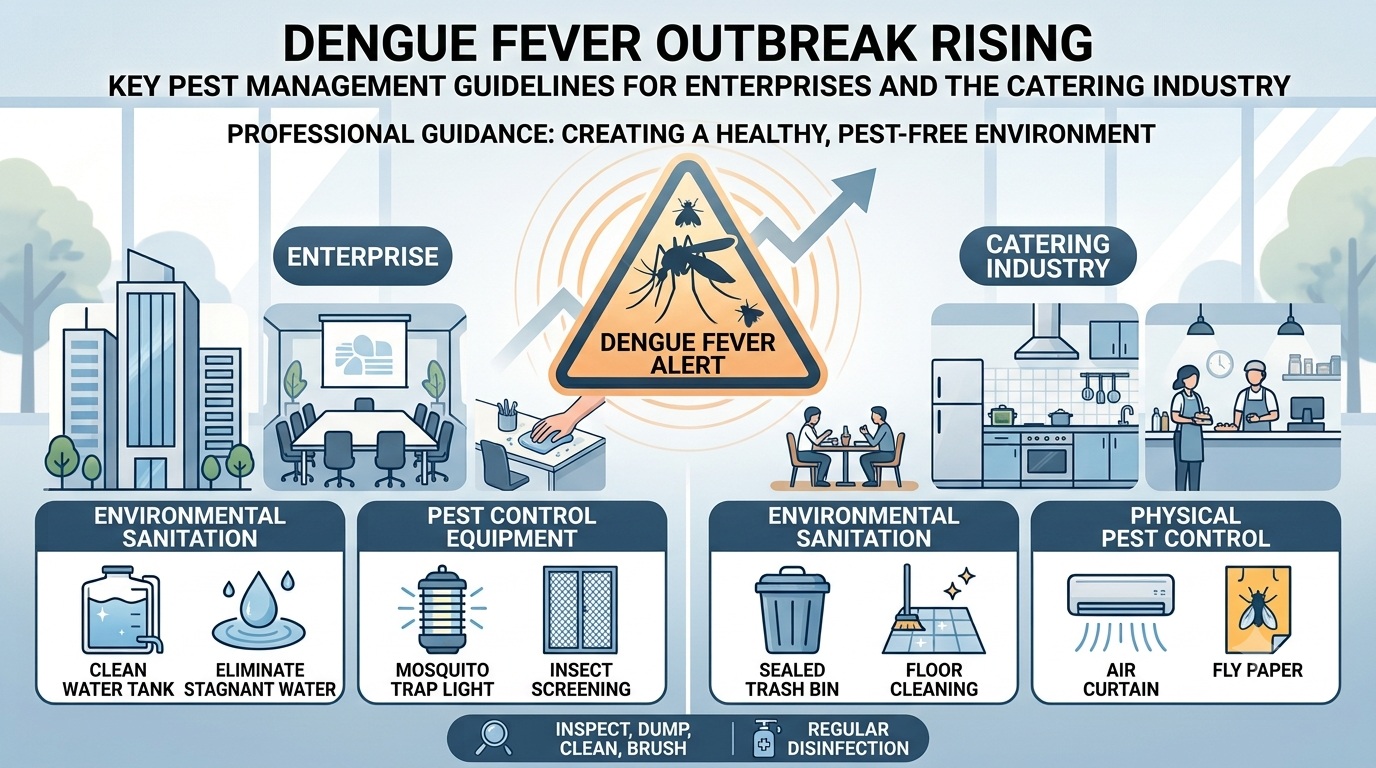
Common Flying Insect Risk Areas in Commercial Facilities
Many flying insects originate outdoors and enter buildings in search of food, moisture, or suitable shelter.
Businesses should pay particular attention to the following high-risk areas:
✔ Entrances and loading docks
✔ Waste storage areas
✔ Drains and drainage systems
✔ Employee break areas
✔ Outdoor smoking areas
✔ Kitchens and food preparation areas
Without routine inspections and proper sanitation, these locations can easily become hotspots for flying insect activity.
Flying Insect Management Goes Beyond Mosquito Control
Although mosquitoes receive the most attention during dengue fever outbreaks, they are not the only flying insects businesses need to manage.
Common flying insect pests also include:
✔ Flies
✔ Fruit flies
✔ Drain flies
✔ Other small flying insects
For food processing plants, restaurants, and other commercial facilities, these insects can compromise hygiene standards and increase the risk of food contamination.
For this reason, flying insect management should be integrated into routine facility hygiene programs rather than implemented only during disease outbreaks.
Building an Effective Flying Insect Management Program
1. Conduct Regular Environmental Inspections
Inspect entrances, outdoor areas, drainage systems, and other potential breeding sites to identify risks before insect populations increase.
2. Maintain a Clean Environment
Keep waste storage areas, drainage systems, kitchens, and food preparation areas clean to reduce conditions that attract flying insects.
3. Reduce Insect Entry Opportunities
Improve entrance management, install appropriate physical barriers where needed, and optimize traffic flow to reduce insect entry into indoor spaces.
4. Install Appropriate Insect Monitoring Equipment
Place insect light traps in strategic high-risk locations to support routine monitoring and flying insect management.
5. Perform Regular Equipment Maintenance
Inspect glue boards, UV lamps, and overall equipment cleanliness to maintain consistent trapping performance and reliable monitoring results.
Combining environmental improvements with continuous insect monitoring allows businesses to identify potential problems early and implement effective corrective actions.
The Role of Insect Light Traps
Insect light traps should be viewed as part of a comprehensive flying insect management program rather than a standalone solution.
Monitoring captured insects helps facility managers identify insect activity trends, locate potential breeding sources, and evaluate the effectiveness of sanitation and environmental control measures.
When combined with source reduction and proper facility management, insect light traps become an effective tool for long-term flying insect control.
Long-Term Management Is the Key
Dengue fever outbreaks serve as an important reminder that flying insect management should not be treated as a temporary response.
An effective long-term strategy should include:
✔ Environmental management
✔ Source reduction
✔ Flying insect monitoring
✔ Routine equipment maintenance
By integrating these practices into daily facility operations, businesses can improve hygiene standards, reduce flying insect risks, and create cleaner, safer working environments.
WELL Electronics' Perspective
WELL Electronics has extensive experience in commercial flying insect management and provides professional insect light trap solutions for food processing plants, restaurants, hotels, offices, and commercial facilities.
Through customized equipment planning, strategic insect light trap placement, and ongoing monitoring support, we help businesses establish cleaner, safer, and more hygienic environments.
• The Invisible Defense for Restaurants: How Insect Light Trap Placement Protects Dining Areas
• Tiny Black Flies Around Your Indoor Plants? How to Get Rid of Fungus Gnats Effectively
WELL Electronics | 40 Years of Professional Commercial Insect Light Trap Manufacturing
Specializing in commercial insect light traps, glue board insect light traps, flying insect control solutions for food processing facilities, and OEM/ODM manufacturing services. We help businesses establish cleaner, safer, and more effective flying insect management environments.