
Tiny Black Flies Around Your Indoor Plants? How to Get Rid of Fungus Gnats Effectively
Indoor plants have become a popular feature in homes, offices, and commercial spaces, bringing greenery and creating a more pleasant environment. However, many people eventually notice tiny black flies hovering around their potted plants, affecting both indoor comfort and appearance.
In most cases, these insects are fungus gnats—small flying insects that thrive in moist, organic-rich potting soil. While they are generally harmless to people, large populations can become a nuisance and may affect plant health if left unmanaged.
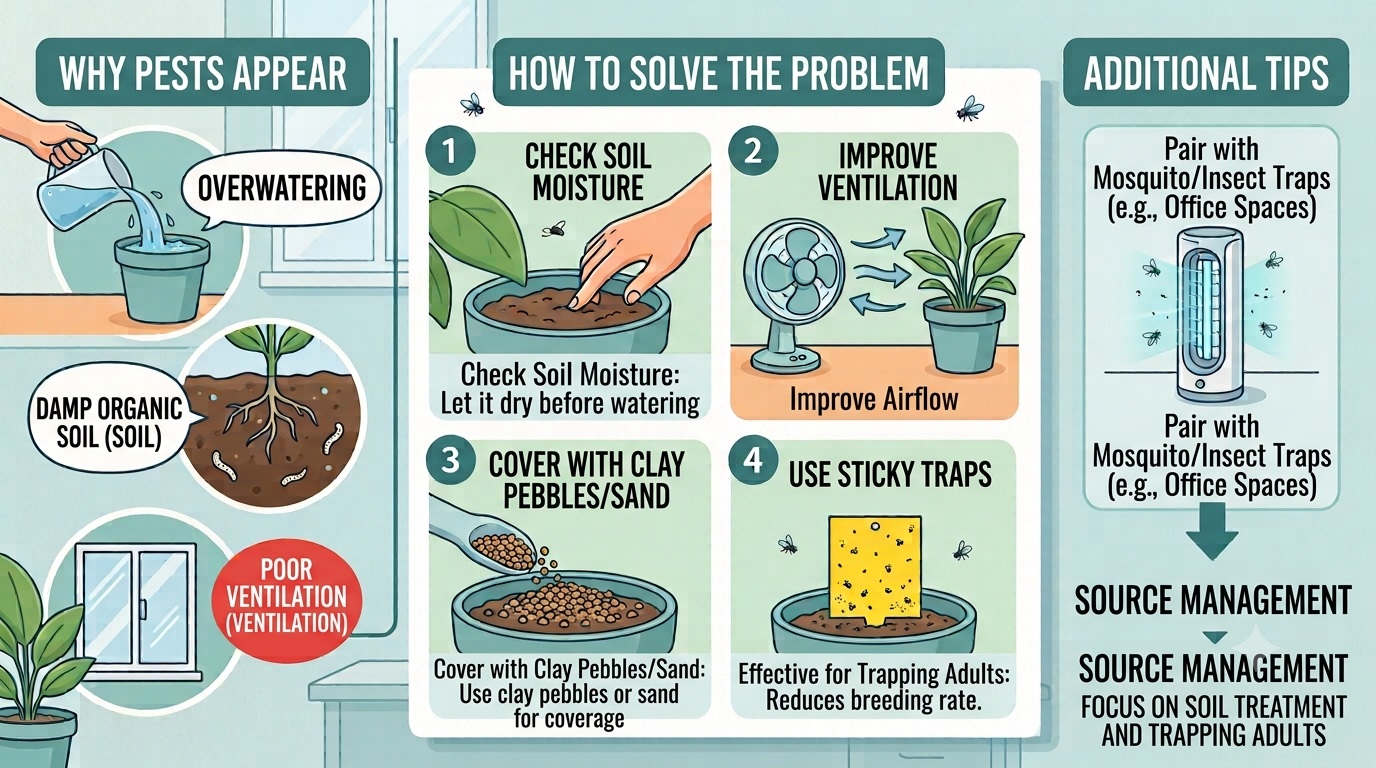
Why Do Indoor Plants Attract Fungus Gnats?
Fungus gnats prefer consistently moist growing media where their larvae can develop. Their larvae feed primarily on organic matter in the soil and may also damage delicate plant roots.
Common causes include:
✔ Overwatering
✔ Constantly moist potting soil
✔ Organic-rich growing media
✔ Poor indoor air circulation
Although adult fungus gnats do not bite or spread diseases, large populations can become a nuisance and may affect the health of young or newly rooted plants.
How to Reduce Fungus Gnats
1. Avoid Overwatering
Allow the top layer of soil to dry before watering again. Keeping the soil overly wet creates an ideal breeding environment for fungus gnats.
2. Improve Air Circulation
Good ventilation helps reduce soil moisture and creates a less favorable environment for fungus gnats.
3. Cover the Soil Surface
Apply a layer of coarse sand, expanded clay pebbles, or decorative stones over the soil surface to make it more difficult for adult fungus gnats to lay eggs.
4. Use Yellow Sticky Traps
Yellow sticky traps effectively capture adult fungus gnats while helping monitor insect activity and infestation levels.
Can Insect Light Traps Help?
If fungus gnats become a recurring problem in offices, reception areas, or commercial spaces, improving plant care should always be the first priority.
For larger indoor environments, professionally selected glue board insect light traps can help reduce flying insect populations while providing continuous monitoring.
Recommended installation areas include:
✔ Office workspaces
✔ Indoor plant display areas
✔ Reception counters
✔ Public waiting and lounge areas
When combined with proper plant maintenance, glue board insect light traps contribute to a cleaner and more comfortable indoor environment.
However, it is important to remember that insect light traps are a supplementary solution. Eliminating the breeding source remains the key to long-term fungus gnat control.
Source Control Is the Most Effective Solution
Most fungus gnat infestations originate from excessive soil moisture and improper plant care rather than the insects themselves.
An effective management strategy should include:
✔ Proper watering practices
✔ Improved indoor ventilation
✔ Covering exposed potting soil
✔ Monitoring with yellow sticky traps or glue board insect light traps
Combining environmental improvements with continuous insect monitoring provides the most effective long-term solution for reducing fungus gnat populations while maintaining healthier indoor plants.
WELL Electronics' Perspective
WELL Electronics provides professional glue board insect light trap solutions for offices, commercial facilities, public spaces, and food processing environments.
We believe effective flying insect management begins with eliminating breeding conditions. By combining proper plant care with reliable insect monitoring equipment, businesses can maintain attractive indoor greenery while creating cleaner, healthier, and more comfortable environments.
• Why Food Factories and Restaurants Cannot Rely on Insect Light Trap Alone: Understanding Integrated Pest Management (IPM)
WELL Electronics | 40 Years of Professional Commercial Insect Light Trap Manufacturing
Specializing in commercial insect light traps, glue board insect light traps, flying insect control solutions for food processing facilities, and OEM/ODM manufacturing services. We help businesses establish cleaner, safer, and more effective flying insect management environments.