
The Invisible Defense for Restaurants: How Proper Insect Light Trap Placement Helps Keep Flying Insects Away from Dining Areas
For restaurants and food service businesses, flying insect control is about more than maintaining a clean environment—it also plays an important role in food safety and the overall dining experience. Even a single flying insect spotted in a dining area can negatively affect customers' perception of cleanliness and hygiene.
Effective flying insect management is not simply about trapping insects after they enter the building. A well-planned insect light trap layout helps intercept flying insects before they reach dining areas, providing a more proactive approach to pest management.
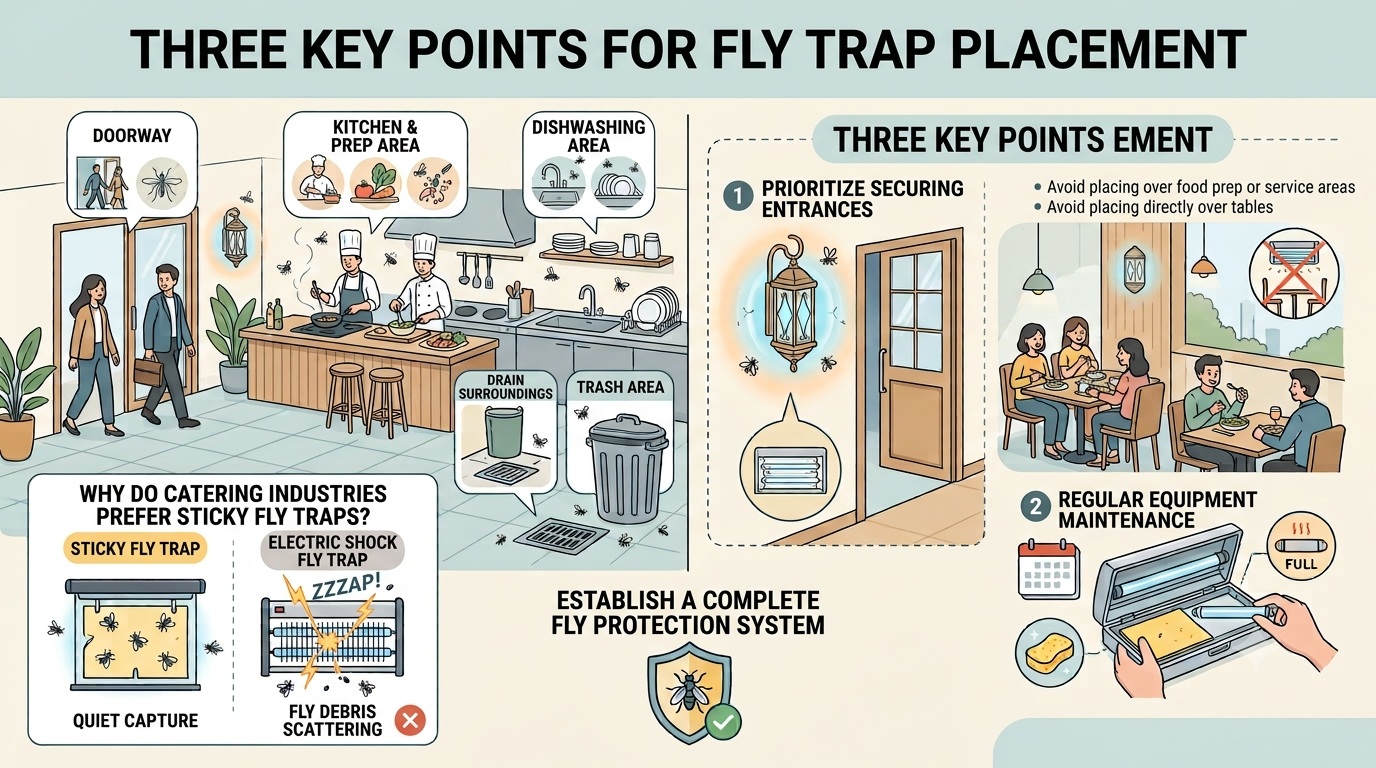
Where Are Flying Insects Most Likely to Enter a Restaurant?
Flying insects are attracted by food odors, moisture, and lighting. High-risk areas commonly include:
✔ Building entrances and exits
✔ Kitchens and food preparation areas
✔ Dishwashing stations
✔ Garbage collection and waste storage areas
✔ Floor drains and drainage systems
In addition to maintaining good sanitation practices, properly installed insect light traps can help reduce the number of flying insects entering indoor spaces.
Three Key Principles for Insect Light Trap Placement
1. Protect Entry Points First
Entrances are the primary pathways through which flying insects enter a building. Installing insect light traps near these areas helps intercept insects before they reach dining or food preparation areas.
2. Keep Traps Out of Customers' Direct View
Insect light traps should be installed along insect flight paths rather than in the center of dining areas or directly within customers' line of sight. Modern, aesthetically designed units can blend into interior décor while maintaining effective insect control.
3. Perform Regular Maintenance
Replacing UV lamps and glue boards on schedule while keeping the equipment clean ensures consistent trapping performance and reliable insect monitoring.
Why Are Glue Board Insect Light Traps Preferred in Restaurants?
Compared with electric grid insect killers, glue board insect light traps securely retain captured insects on adhesive boards, reducing the risk of insect fragments becoming airborne while also operating quietly.
For this reason, glue board insect light traps are widely preferred in restaurants, cafés, hotels, food processing facilities, and other environments where food safety, cleanliness, and customer experience are priorities.
Build a Comprehensive Flying Insect Management Program
Effective flying insect control requires more than installing a single piece of equipment.
A complete management strategy should include:
✔ Routine sanitation and housekeeping
✔ Source reduction and environmental management
✔ Strategic insect light trap placement
✔ Regular equipment inspection and maintenance
By integrating these practices, restaurants can reduce flying insect risks, improve hygiene standards, and provide customers with a cleaner and more comfortable dining environment.
WELL Electronics' Perspective
With decades of experience in flying insect control, WELL Electronics provides professional insect light trap solutions for restaurants, food processing plants, hospitality venues, and commercial facilities.
We help businesses develop effective insect light trap layouts tailored to different environments, supporting food safety programs while maintaining clean, attractive, and comfortable dining spaces.
Learn more about commercial flying insect management and insect light trap applications:
• Why Mosquitoes Increase After the Rainy Season: The Importance of Standing Water Management
WELL Electronics | 40 Years of Professional Commercial Insect Light Trap Manufacturing
Specializing in commercial insect light traps, glue board insect light traps, flying insect control solutions for restaurants, food processing facilities, and OEM/ODM manufacturing services. We help businesses establish cleaner, safer, and more effective flying insect management environments.