
Can Perfume Repel Mosquitoes? Understanding the Difference Between Perfume and Mosquito Repellent
During summer, some people may wonder: “Can perfume be used as mosquito repellent?”
There are many claims that scents such as lemon, lavender, and mint can repel mosquitoes. Some plant-derived ingredients may have repellent properties, but having a fragrance does not necessarily mean it provides reliable mosquito protection.
Perfume is primarily designed to provide fragrance, not to repel mosquitoes. Therefore, regular perfume should not be considered a substitute for a dedicated mosquito repellent. Some floral, fruity, or sweet scents may also affect mosquito behavior, but the effect can vary depending on the ingredients, concentration, mosquito species, and environment.
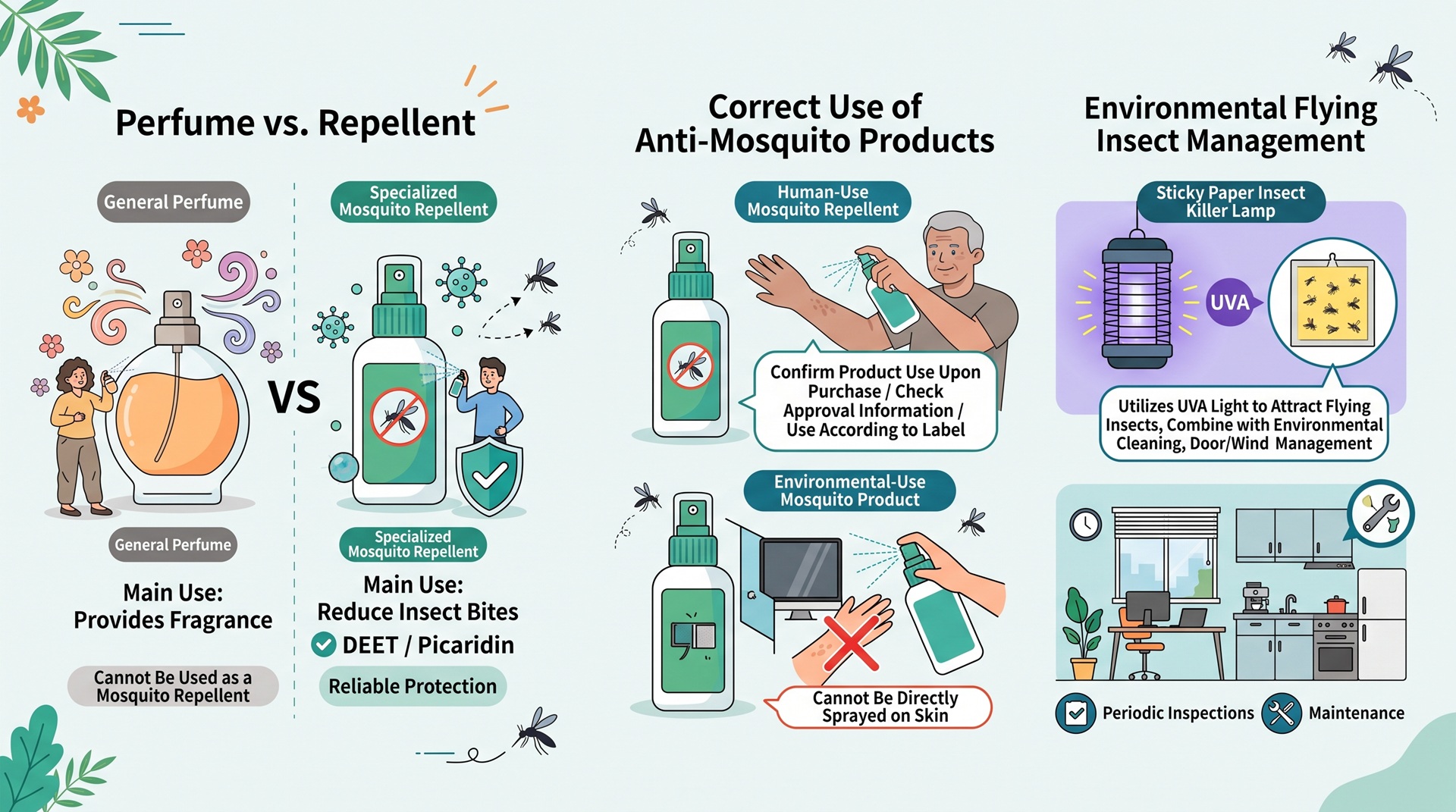
What Is the Difference Between Perfume and Mosquito Repellent?
| Comparison | Regular Perfume | Mosquito Repellent |
|---|---|---|
| Main purpose | Provides personal fragrance | Helps reduce mosquito bites |
| Main ingredients | Fragrance, alcohol, water, etc. | Ingredients such as DEET and Picaridin |
| Designed for mosquito protection | No | Yes |
| Protection | Cannot be considered reliable protection | Depends on the active ingredient, concentration, and product formulation |
| How to use | According to normal perfume use | Follow the product label |
A pleasant fragrance does not necessarily mean mosquito protection.
Common Mosquito Repellent Ingredients
DEET
DEET is one of the most widely used mosquito repellent ingredients. It can help reduce the likelihood of mosquitoes approaching and biting. The effectiveness and duration of protection may vary depending on the product concentration and formulation.
Picaridin
Picaridin is another commonly used mosquito repellent ingredient. Its effectiveness and protection time can vary depending on the product formulation, concentration, and method of use.
The U.S. Centers for Disease Control and Prevention (CDC) and the U.S. Environmental Protection Agency (EPA) recognize DEET, Picaridin, and other ingredients as commonly used mosquito repellents. Always follow the product label when using mosquito repellent products.
Are You Using Mosquito Repellent Correctly? Never Apply Environmental Pesticides to Your Skin!
Not every product labeled as a “mosquito repellent” is designed to be applied directly to the skin.
In Taiwan, mosquito control products may have different intended uses, including products designed for use on people and environmental-use mosquito control products. These products have different intended applications, so always check the product label before use.
Repellents Designed for Personal Use
These products are designed for personal mosquito protection. When applying them to the skin, always check the product label for the appropriate areas, application method, and precautions.
Environmental-Use Mosquito Control Products
These products are intended for mosquito control in the surrounding environment, such as screens, doors, corners, or other specified areas, according to the product label.
Environmental-use mosquito control products should not be applied directly to human skin.
3 Things to Check Before Buying
✔ Check the intended use: Is it for use on people or in the environment?
✔ Check the approval or registration information: Don't rely only on the words “mosquito repellent” on the packaging.
✔ Follow the product label: Do not increase the amount or change the recommended method of use.
Effective mosquito protection is not simply about spraying more. Choose the right product, read the label, and use it correctly.
Personal Mosquito Protection vs. Environmental Insect Control
Mosquito repellents and insect light traps serve different purposes and are used in different situations.
Personal Mosquito Protection
Using mosquito repellent or wearing long sleeves can help reduce mosquito contact and the chance of being bitten.
Environmental Insect Control
Insect light traps are designed to help manage flying insects in the surrounding environment. They use UVA light to attract flying insects and then capture them with glue boards or other trapping methods.
Simply put:
Mosquito repellent → Protects people
Insect light trap → Helps manage the environment
The two approaches are not interchangeable and should be selected according to the specific situation and management needs.
Why Do Commercial and Food Facilities Need Environmental Insect Management?
Restaurants, food factories, central kitchens, supermarkets, and other commercial facilities need more than personal protection. They also need an overall approach to flying insect management to help maintain a clean and well-managed environment.
Depending on the environment and management requirements, facilities can:
✔ Choose an appropriate trapping method: Glue board insect light traps make it easy to inspect and replace glue boards.
✔ Plan suitable installation locations: Consider traffic flow, entrances, and areas where flying insects are active.
✔ Perform regular inspection and maintenance: Monitor insects caught on glue boards and replace consumables when necessary.
Glue Board Insect Light Traps
Glue board insect light traps use UVA light to attract flying insects and then capture them with glue boards. Unlike electric shock traps, they do not kill insects by electrocution, helping reduce the risk of insect fragments being scattered. For this reason, they are commonly used in restaurants, food factories, central kitchens, and other commercial environments where hygiene management is important.
An insect light trap is only one part of an overall flying insect management program. It should also be combined with routine cleaning, door and window management, waste handling, and other appropriate control measures.
WELL Reminder
Perfume can add a pleasant personal fragrance, but regular perfume should not be used as a substitute for mosquito repellent.
When purchasing a mosquito control product, always check its intended use and product labeling:
Personal-use mosquito repellent → Use on people according to the product label
Environmental-use mosquito control product → Use in the environment according to the product label
For restaurants, food factories, central kitchens, and other commercial facilities, environmental management is equally important. Combining suitable insect trapping equipment with appropriate installation and regular maintenance can help establish a more comprehensive flying insect management program.
Conclusion
Perfume cannot replace mosquito repellent, and mosquito repellent cannot replace environmental insect management.
When choosing a mosquito control product, first confirm its intended use and follow the product label. For commercial and food-related facilities, effective flying insect management should also include environmental management, appropriate equipment placement, and regular maintenance.
Choose the right product, use it correctly, and take a comprehensive approach to insect control.
• U.S. Environmental Protection Agency (EPA): Skin-Applied Repellent Ingredients
• World Health Organization (WHO): Dengue and severe dengue
• Taiwan Ministry of Environment: Environmental Agents Management Information System
• How Often Should You Replace Glue Boards in Insect Light Traps?
• Commercial Flying Insect Management & Insect Light Trap Configuration
WELL Electronics|40+ Years of Professional Insect Light Trap Manufacturing
Specializing in commercial insect light traps, glue board insect light traps, electric shock insect light traps, flying insect control for food facilities, and OEM/ODM manufacturing services. WELL helps businesses across industries establish more effective flying insect management environments.