
How Often Should You Replace Glue Boards in Insect Light Traps?
Many people assume that if an insect light trap is still illuminated, it is operating properly.
However, the trapping performance of a glue board insect light trap depends not only on the UVA lamp, but also on the condition of the glue board itself. Over time, glue boards may lose adhesive effectiveness due to insect accumulation, dust buildup, grease contamination, or other environmental debris, reducing overall trapping efficiency.
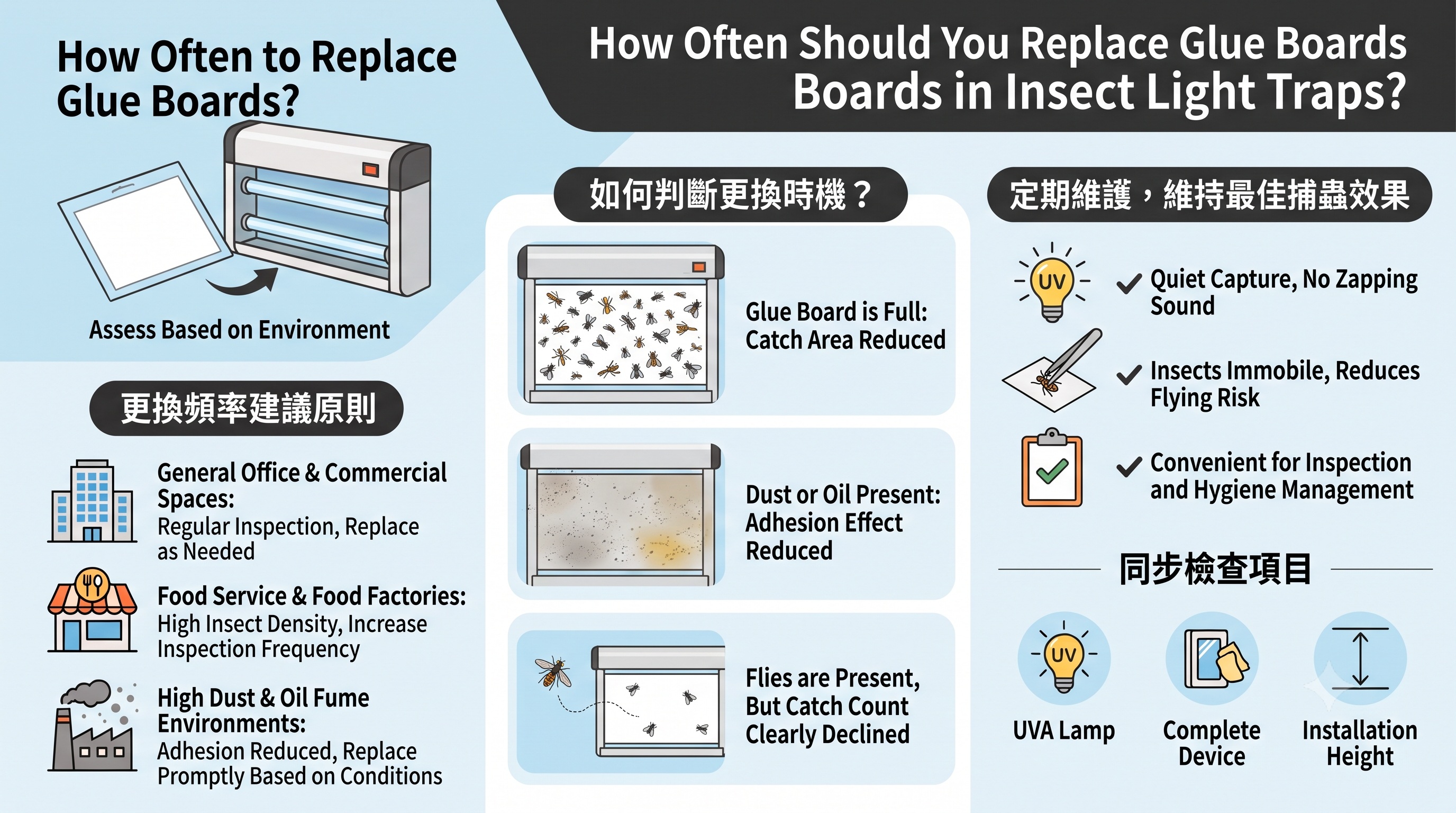
How Often Should Glue Boards Be Replaced?
There is no fixed replacement schedule for glue boards. The replacement frequency depends on the operating environment, insect activity, and site conditions.
General recommendations include:
1. General Offices and Commercial Facilities
Inspect glue boards regularly and replace them based on their condition.
2. Restaurants and Food Processing Facilities
Higher insect activity requires more frequent inspections to ensure consistent trapping performance.
3. High-Dust or Grease Environments
Dust, grease, and airborne contaminants can reduce adhesive performance. Glue boards may need to be replaced earlier depending on environmental conditions.
How Do You Know When a Glue Board Needs Replacement?
1. Large Numbers of Insects Have Been Captured
As insects accumulate on the glue board, the available adhesive surface gradually decreases, reducing trapping efficiency.
When a significant portion of the adhesive surface is covered, replacing the glue board helps maintain effective insect capture performance.
2. Dust or Grease Covers the Glue Surface
In kitchens, food processing areas, and dusty industrial environments, airborne dust and grease may cover the adhesive surface and reduce its effectiveness, even if only a small number of insects have been captured.
3. Insect Capture Rates Have Decreased
If flying insects are still present but capture rates have noticeably declined, inspect the following:
✔ Is the glue board saturated with captured insects?
✔ Is the adhesive surface contaminated with dust or grease?
✔ Is the UVA lamp still providing effective insect attraction?
✔ Has the unit been cleaned and maintained regularly?
Any of these factors can affect trapping efficiency and should be checked during routine maintenance.
Routine Maintenance Helps Maintain Peak Performance
Glue board insect light traps are widely used in:
✔ Food processing facilities
✔ Restaurants
✔ Hotels
✔ Commercial facilities
Key advantages include:
✔ Quiet operation without electric zapping noise.
✔ Captured insects remain attached to the glue board, reducing contamination risks.
✔ Easy inspection and monitoring for routine hygiene management.
In addition to replacing glue boards, regular maintenance should include:
✔ Checking UVA lamp performance
✔ Cleaning insect debris and dust from the unit
✔ Confirming proper installation location
✔ Verifying that the unit is operating correctly
Routine maintenance helps maintain stable trapping performance, reduce flying insect populations, and support a cleaner and more hygienic environment.
WELL Tip
An insect light trap should not be installed and left unattended for long periods.
Regular glue board replacement, equipment cleaning, and UVA lamp inspection are essential for maintaining consistent insect trapping performance and improving overall flying insect management.
WELL provides commercial glue board insect light traps and replacement consumables to help food processing facilities, restaurants, hotels, and commercial businesses establish effective flying insect control systems.
• The Invisible Defense for Restaurants: How Proper Insect Light Trap Placement Helps Keep Flying Insects Away from Dining Areas
WELL Electronics | 40 Years of Professional Commercial Insect Light Trap Manufacturing
Specializing in commercial insect light traps, glue board insect light traps, flying insect control solutions for food processing facilities, and OEM/ODM manufacturing services. We help businesses establish cleaner, safer, and more effective flying insect management environments.